SPOILERS AHEAD (obviously…)
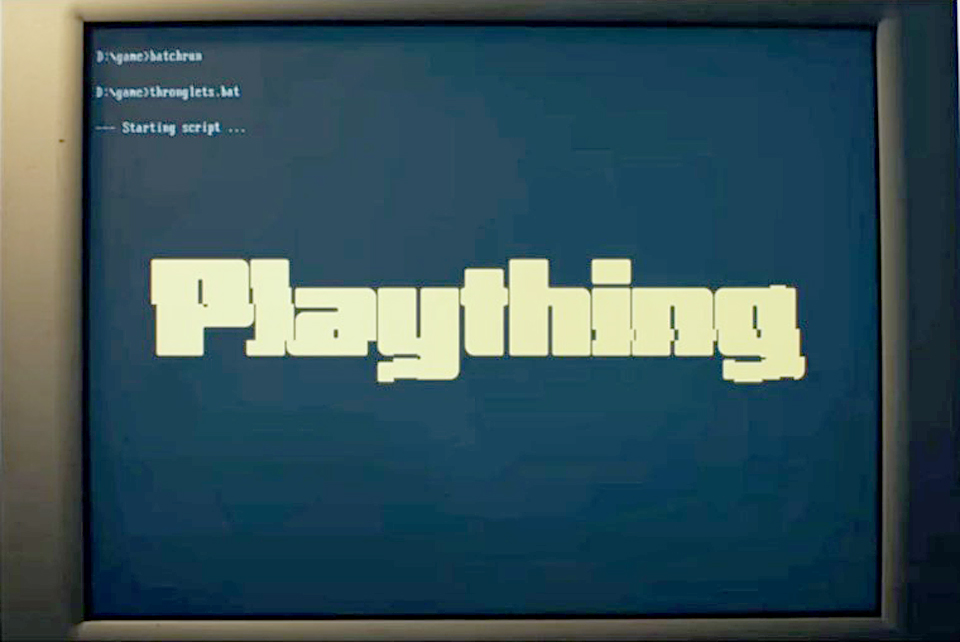
Season Seven of Black Mirror brings the exciting installment of “Plaything,” the fourth of six episodes. “Plaything” originates from the 2018 interactive choose-your-own-adventure film, Bandersnatch, another installment of the Black Mirror universe. Renowned by many as a cultural and cinematic landmark, Bandersnatch has several endings that can conclude the film based on the viewers’ choices. “Plaything” is a continuation of one potential ending. Set in 2034, the episode follows Cameron Walker, who is arrested under suspicion of murder and recounts to police how the reason for the murder was due to an unreleased video game from the 1990’s.
There is a lot to unpack following a viewing of this episode. In classic Black Mirror fashion, there are commentaries to be examined as well as hidden secrets and references to be uncovered. “Plaything” includes references to events both inside and outside of the Black Mirror universe, nods to Bandersnatch in specific, foreshadowing of the end from the beginning, and commentaries on real-world topics. These hidden gems make the episode that much more enriching, aiding in the creation of a thoroughly developed and thought-provoking storyline.
Beyond the Narrative
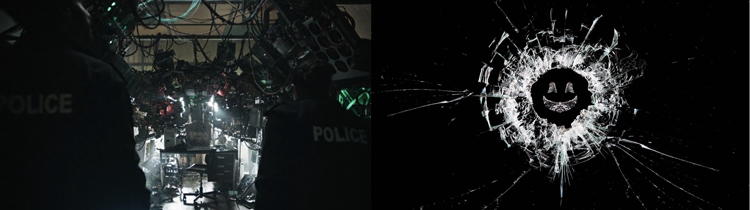
Several references that reach outside the narrative are planted throughout the episode. The first is a poster located in the convenience store where Cameron is arrested. The advertisement is for Ditta, the confectionary company that plays a large role in the seventh season’s second episode, “Bête Noire.” Another notable detail of the episode is the episode’s protagonist, Cameron Walker. He works at PC Zone in the year 1994. Black Mirror’s creator, Charlie Brooker, worked for the same company in real life during the 1990’s. This is more than likely a nod to his life, meaning at least some of the episode stems from him drawing on personal experiences. Even the name of the character sounds similar to his own.
Toward the beginning of the episode, after Cameron is arrested, the police search his flat, finding new and old computer hardware covering just about every square inch of the interior. A Nintendo 64 can clearly be spotted in this scene, and, later on, there is a montage of Cameron purchasing different computer equipment over time at the Throng’s request. Since the timeline of the episode spans from 1994 to 2034, this is a quick and clever commentary on how much technology has and continues to evolve as well as its potential for future growth and changes.
Grids are visually very prominent in “Plaything.” Grid-like visuals appear inside the interrogation room as well as on the ceiling of Colin Ritman’s office, where there are also many square and rectangular posters. Additionally, Colin and Cameron both cover their computers with a towel while the Thronglets program is running. These towels both have grid-like patterns. These grids add a certain tone of this world, making it seem almost partially pixelated, as the Thronglets world is. Additionally, the towel covering Cameron’s computer has multiple stains on it, and the shape they make up is quite reminiscent of the Black Mirror logo.
One of Many Outcomes
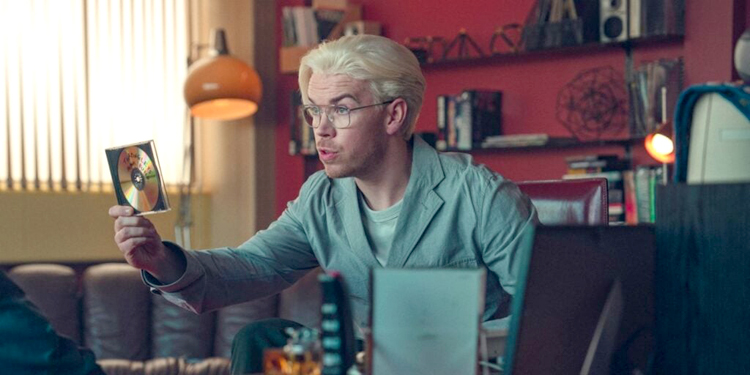
It is clear early on in “Plaything” that it plays off of Bandersnatch in some way, as Colin Ritman from Tuckersoft and his infamous mental breakdown are mentioned to Cameron toward the beginning of the episode. Those familiar with the interactive film know that there are several potential endings that are dependent on the viewers’ choices. When Cameron’s boss explains to him that Colin Ritman has developed a new game and Cameron travels to Tuckersoft for a meeting with him, encountering Mohan Thakur there and seeing how the two have both aged, it is evident that “Plaything” is, in fact, a continuation of one potential Bandersnatch ending. The timeline also suggests a sequel of some sort as Bandersnatch is set in 1984 whereas the “Plaything” timeline begins in 1994.
There are also niche references to Bandersnatch tucked into the “Plaything” storyline. One of them is the reveal of Cameron murdering his acquaintance, “Lump,” before cutting up his body with a saw in a bathtub and stuffing the pieces into a suitcase, making him unrecognizable to authorities. In Bandersnatch, a similar killing takes place and the viewer is given the option to cut up the body with a saw in a bathtub. Small details such as this one are only identifiable to Bandersnatch viewers, adding new depth to the episode for Black Mirror fans.
The Beginning of the End

“Plaything” contains several foreshadowing events, hinting at what is to come from the beginning of the episode. When Cameron is first seen in the act of robbing the convenience store, he is wearing headphones that play a high-pitched static noise. This is later revealed to be the Throng’s sound of communication. It is heard through many devices nearby when the Throng takes over the central state computer at the end of the episode. Cameron is also arrested in the first scene, and when he is caught by police he is compliant and almost eager. He waves at them as a happy child would, and he sticks his wrists out readily for handcuffs when the officers inform him that he is under arrest. It seems like odd behavior, but Cameron later reveals that it was his plan all along to be arrested on purpose as a means of accessing a security camera connected to the central state computer.
Additionally, Cameron requests a pen and paper several times throughout the episode, starting when he is first placed in a cell. When the woman in charge of psychological evaluation finally grants his request, Cameron draws what seems to be a type of QR code. He holds it for the security camera to scan, granting the Throng access to the central state computer, allowing them to transmit a signal to every connected device in the world and giving them much more power than ever before. Cameron even mentions how powerful the computer is at the start of the interrogation. He foreshadows his intentions early on and throughout the episode.
The Throng
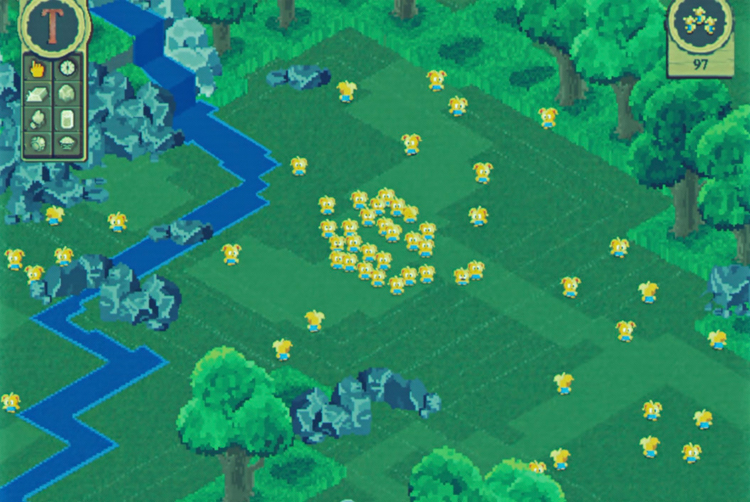
Thronglets are digital creatures in the episode that hold a lot of symbolic weight in actuality. The “caveman instincts” of humanity are mentioned several times throughout this story and even physically characterized through the character of Lump. An old acquaintance who takes advantage of Cameron for a place to stay whenever he feels it is convenient for himself, Lump stays at Cameron’s flat twice during the episode, both unannounced, and neither truly consensual. The first time Lump stays with Cameron, the two take LSD together, which Cameron claims gave him the ability to understand the Throng and communicate with them. However, the second time Lump stays at Cameron’s apartment, he discovers the Throng while Cameron is away at work. He wastes no time in killing them brutally, dropping boulders on them and setting fire to many. Cameron catching him in the act is what drives him to kill Lump in a fit of rage.
Lump’s careless brutality toward the Throng represents the cruelty of humanity. Humans tend to lack care for other species and beings that exist outside of themselves. Cameron also mentions that he was taught to fear other humans early in life. This places him in a more vulnerable population, as he is more likely to appreciate other species more than humanity, especially cute digital critters. This is also likely why LSD makes the world more colorful and harmonious to Cameron when he is communicating with the Throng and more scary when he is around other humans, as seen on his commute to work on the train when peoples’ faces seem distorted and he suffers through paranoia.
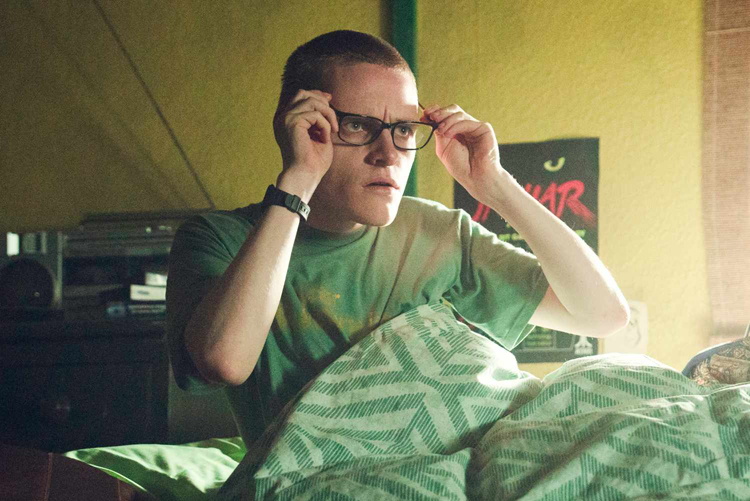
From Cameron’s perspective, humanity is full of evil whereas the Throng is pure. However, as a viewer, this is never proven true. Cameron allows the Throng access to his mind through a “neurological interface,” and continues to help them “coexist” with humans by executing their plan to gain access to the central state computer. In doing this, they take over every connected device in the world, which causes just about everyone to collapse on the ground. It is presumed that they will wake up, but it is entirely unknown what state of mind they will inhabit. The Throng could just as easily have bad intentions as humans tend to in the “Plaything” universe. At the very end of the episode, Cameron reaches his hand out to the now collapsed officer that, beforehand, interrogated and beat him senseless. It is clear from this notion that Cameron expects the officer to wake up with a brand new mentality, one that agrees with the Throng. However, the question remains of whether this will have a positive impact on the world. Having a sudden and drastic increase in power, the Throng may decide to wipe out humanity as a whole. This remains unknown.
Ultimately, one message remains prominent throughout “Plaything.” Treating others the way that one would want to be treated is the key to peace and coexistence. It is made very clear in this story that humans do not possess that mentality. Since Cameron has been mistreated by humans throughout his life, he easily sides with the Throng over humanity, which gives them an abundance of unforeseen power, and since the Throng has also been mistreated by humanity, they are more likely to annihilate the species entirely, given the chance. “Plaything” produces a dark commentary on human behavior and the importance of treating others with the respect that people want for themselves.