
SPOILERS AHEAD (obviously…)
The fourth installment of Black Mirror presents “Arkangel,” a dark commentary on extreme helicopter parenting backed by futuristic technology. This story follows a protective mother, Marie, and he daughter, Sara, when an irreversible surgery is performed for the purpose of inserting a chip into her head. Marie holds total control of the chip and its functions through a connected tablet, allowing her to monitor all of her daughter’s activity, including everything she sees and hears (yes, everything) as well as control what she is exposed to. The episode points to extreme safeguards presenting their own dangers.
Embedded in the episode are numerous details that enrich the plot and strengthen the storyline. Nuances intentionally placed throughout the story make for an intricate telling and add to its disturbing conceptual nature. World building, foreshadowing, references, and metaphor all contribute to the dark and convoluted storyline of “Arkangel.”
Notes on Innocence
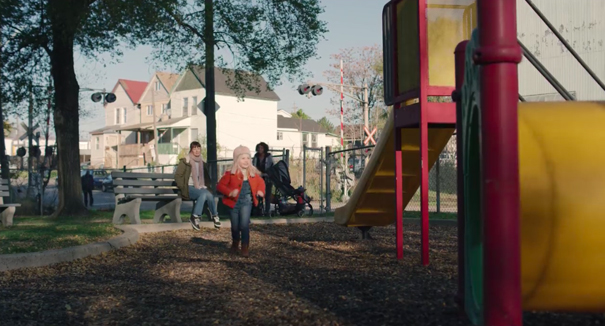
Innocence is a prominent theme in “Arkangel.” It is clear from the start that yellow plays a huge role in the story’s color scheme. The medical staff wear yellow scrubs in the first scene, the interior of Marie’s house is yellow, the playground she takes Sara to is predominantly yellow, and Sara wears several yellow outfits. Yellow is a color often associated with youth and innocence, but also with caution and warning, as portrayed in this narrative.
Aside from visual representation, Marie is conditioned to fear for her daughter’s safety through experience. She has a caesarean section in order to give birth to Sara, who comes out quiet when she is born. As the doctors exhibit concern, Marie fears the worst before Sara finally begins to cry. Later, when Sara is three years old, Marie takes her to the playground where she follows a cat far away onto a train track, prompting a search party and evoking a lot of fear from Marie once again. These instances accentuate Marie’s concern about the world and Sara’s upbringing, prompting her to schedule a procedure for Sara at Arkangel, a company that installs an irremovable chip into Sara’s head for the initial purpose of keeping her safe.
History Repeats

The most climactic moments of the episode are foreshadowed by events that take place early on. When Sara is in grade school, Marie decides to take the filters off of her chip. As Sara lives out her first day completely uncensored, her friend, Trick, shows her different types of explicit content, including a pornographic video. Later on, when Trick and Sara develop a relationship and are intimate, Sara emulates what she saw in this video when they were younger, as it was her only exposure to sexual content.
Before the filters were removed, Trick shows her a violent video but she cannot see or hear most of it. However, it makes her curious, prompting her to self harm with a sharpened pencil and hit her mother when she catches her in the act. After the filters are removed, she watches violent content uncensored for the first time, her only exposure to any type of harm. Later, when she is enraged with her mother that she has been watching and monitoring her life in secret, she blugeons her with the tablet to the point of unconsciousness. Although she is hurt and full of spite, the action feels extreme, but considering her only exposure to violence has been brutal and intense, this is what she mimics.
A Nod to Extremes
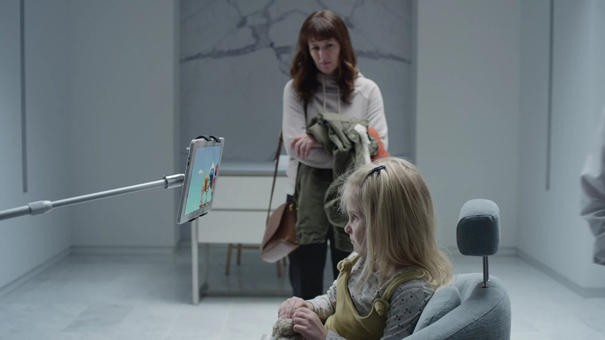
It is not uncommon that Black Mirror episodes contain references both within and outside of its own universe. “Arkangel” holds a few unmistakable references of its own. When Sara first has her chip implemented at the Arkangel facility, she is shown violent content in order to demonstrate how censorship works within the system. The footage that is shown is from Black Mirror’s fifth episode of its third season, “Men Against Fire.”
The Arkangel technology itself is very similar to that of the grain in “The Entire History of You,” the third episode of Black Mirror’s first season. The action of sifting through memories on a wheel and playing them back one by one closely resembles the technology used in that episode. In “Arkangel,” it is mentioned that the technology has not been fully released and it ends up never being released at all, a stark contrast to “The Entire History of You,” where the technology is very popular and everyone seems to possess it. This suggests that perhaps “Arkangel” takes place earlier chronologically in the Black Mirror universe, despite the episode’s later release date. An additional small reference is made when Trick shows Sara violent videos at school while describing them all to her. During one of them he explains how a character must cut his own foot off with a hacksaw. This is more than likely a reference to the first Saw movie.
Applied Learning

One of Sara’s classes discusses the Oedipus Complex and how it relates to free will as well as moral responsibility. The female version of this phenomenon is the Electra Complex, and while Sara’s father is not present in the story nor does sexual attraction have anything to do with the narrative, Sara does develop a hostility toward her mother due to her lack of moral responsibility and the fact that she takes away Sara’s free will and autonomy. A resolution is never reached between the two, leading to a somber ending. This anecdote inside the classroom reflects the rage Sara begins to feel due to her lack of ability to make choices for herself and see the world the way others do. “Arkangel” represents the dangerous consequences of trading autonomy for the preservation of innocence.