SPOILERS AHEAD (obviously)…
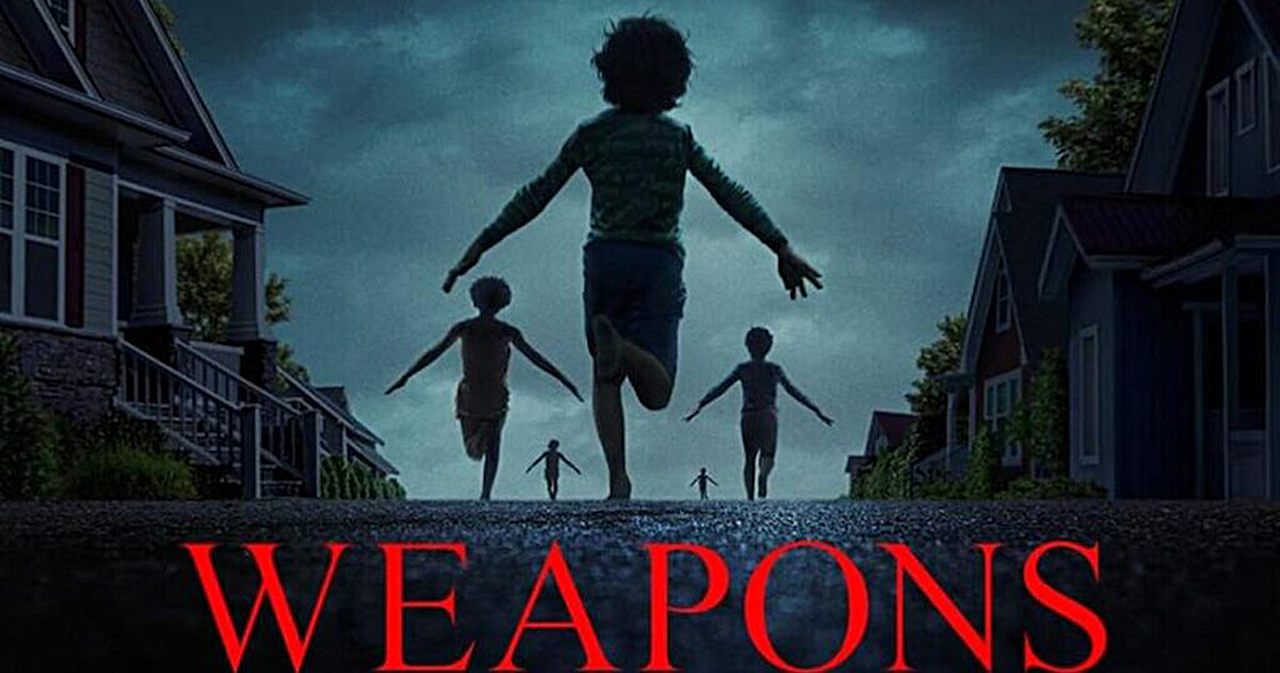
Weapons, directed by Zach Cregger, has been widely talked about upon its release in August 2025. The horror mystery, following a non-linear narrative structure similar to the 1999 film, Magnolia, directed by Paul Thomas Anderson, provides a different point of view through the lens of six different characters, expanding the timeline with each new perspective. When seventeen school children that belong to the same classroom all run into the night and disappear at 2:17 A.M., leaving just one boy behind, their entire community is shaken, desperate for answers and angry at the lack of resolution presented. The film was intricately crafted and has consequently sparked conversation around its themes and symbolism.
Symbols, both apparent and embedded can be found throughout the plot of the film, and themes of witchcraft, addiction, and control are prevalent. These elements not only play a vital role in sculpting the entire narrative, but they also are responsible for the layers of meaning that can be uncovered in the film’s storyline. Although Cregger has not confirmed any specific theories that have been crafted upon watching Weapons, many interpretations can be taken away from the film. Moments throughout the story foreshadow the events to come, reveal themes of witchcraft, addiction, and parasitic control, hold potential social and political commentary, and reference outside works.
Foreshadowing the Past
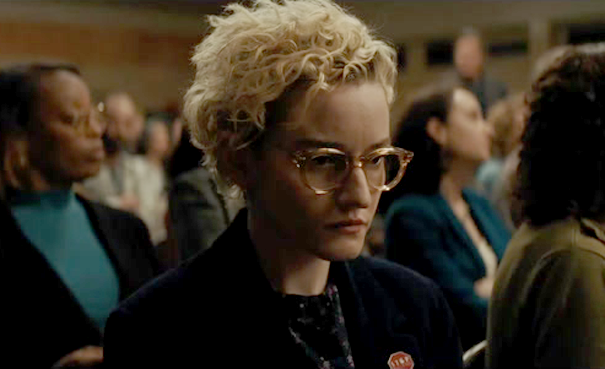
Each time the perspective switches in the film, a bit more of the past is revealed until eventually the whole story of how the children went missing comes to light. At the very beginning of the film, the audience sees Alex being questioned by police, and in these couple of quick camera shots, Alex’s entranced father can be seen beside him as well as Gladys. During Justine’s portion of the film, she looks around Alex’s house, peers inside, and sees both of Alex’s parents sitting on the couch, disheveled and under Gladys’s spell. She also has a brief interaction with James at the liquor store, where he asks her for money. This is the audience’s first introduction to James, who becomes an important character. During Archer’s part of the story, it is revealed that he owns a construction company and he bought the wrong color paint for a job, purchasing red when the customers ordered green. He keeps this can of paint in the bed of his truck. Archer later follows Justine home from a PTA meeting where it is revealed that he is the angry parent blaming Justine for the missing children, and this whole series of events insinuates that it was Archer that painted the word “witch” on Justine’s car, due to his obvious animosity toward her. At the end of Archer’s portion, he confronts Justine at a gas station but the interaction is cut off by a bug-eyed, messy, bloody Marcus running at Justine in the same fashion the children ran from their homes when they went missing. He then attacks Justine. This scene provides a glimpse into how the children disappeared. Marcus is under the same spell that they are.
Paul’s part of the film serves to reveal how the truth ends up being discovered. While patrolling the neighborhood, he finds James breaking and entering and runs him down. He panics and lashes out when he is poked by one of James’s drug needles and hits him, leaving him unconscious. This entire interaction is caught on Paul’s dashcam. When he tells the police chief about the situation, he is told he must hope that James does not come in to report him before the footage is recorded over. This leads to James’s part of the film.

James is the entire reason the truth is unveiled, which is comedic considering he is the most unreliable narrator. While trying to break into cars and homes for items he can pawn, he stumbles upon the Lilly house. There, he finds Alex’s entranced parents, several empty cans of Campbell’s soup, which Alex had been feeding to his parents and classmates, and of course, the seventeen missing children. James exits the house after this reveal as Alex’s parents get up simultaneously from the couch and chase him, but he leaves with quite a few items to pawn. He later spots a poster for the missing children in a pawn shop and is immediately intrigued by the reward. He attempts calling the police station to tell them about the children but is disregarded due to his spastic demeanor from being under the influence. As he cuts his losses and approaches the police station, Paul finds him and, in a panic, runs him down again. James convinces Paul to let him reveal where the children are and they go to the house together. There, Paul is seen entering the house and not emerging until much later, marching to the car menacingly and growling as he drags James into the house with him.
Marcus’s portion then comes into play where he has a meeting with Gladys. This is the first time the audience hears her speak. Shortly thereafter, it is revealed exactly how Gladys’s spell works and how Marcus fell victim to it. The last perspective shown is that of Alex, who comes home from school to find that Gladys has put his parents under her spell shortly after she comes to stay with them. She makes them both stab themselves repeatedly with forks to show Alex that they are fully under her control, and, consequently, so is he. Alex is later shown taking a test on reading the time on an analog clock. The last question on his test is undone, but the answer is 2:15, which is when Alex wakes up to find Gladys casting her spell on the children in his class later on.
There also lies a potential foreshadow in the narration at the beginning and ending of the film. A young girl begins telling the story off screen, she seems vacant and distant but also tells the story as if she is explaining to a friend or someone she just met, as it feels very conversational. At the very end of the film, the narrator speaks again, saying “all of the kids from his class got reunited with their parents. Some of them even started talking this year.” It has been theorized that the narrator is Maddie, one of the seventeen missing children. One of the names that appears on the missing poster is Madelyn McNulty, which supports this theory, but it has not been confirmed.
Magic and Mayhem, Substances and Control
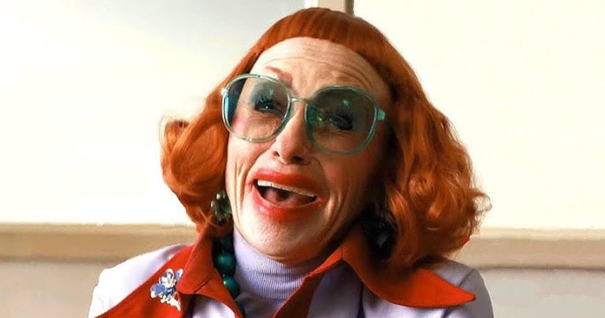
There are several important recurring themes in Weapons, and one of the most prevalent is witchcraft. Besides the obvious notion of Gladys being a witch and casting spells, this theme is present in other ways throughout the film. The word “witch” is painted on Justine’s car, and while she is not a witch, there is, in fact, a witch lurking in the shadows who is responsible for the missing children, and that is Gladys. However, the entire town does not know of Gladys, so they all point the finger at Justine. At one point, Donna douses Justine in alcohol upon finding out that she was drinking with Paul, and at another point, Marcus attacks her while she pumps her gas, spilling the gasoline all over her. As these are both very flammable substances, this point to the historical context of witches where they were burned.
Triangles are also present in several places throughout the narrative. One appears inside the “O” in Weapons during the title sequence. The formation in which the children run when they are under the spell also suggest a sharp, triangular shape. When Justine looks around Alex’s house, she finds the windows are covered with newspapers except for one triangular hole through which she looks inside. Themes of addiction are also very prominent in the film, as it is clear that both Justine and Paul suffer from alcohol addiction. It is implied that Paul attends Alcoholics Anonymous meetings. This famous organization has a triangular symbol, drawing ties between the themes in the film.
Parasites are another prominent theme in Weapons, as they are mentioned when Marcus and Terry watch a television show about parasites and ants, and again later on when Justine teaches about them in her classroom. Gladys acts as a parasite both to the Lilly family and all of the seventeen children, as she latches onto them and benefits from holding them under her control. This parasitic control she has over her victims is the primary conflict of the storyline all together. Another notable detail about Gladys’s power is that it comes from a tree she keeps with her at the Lilly household. This is further emphasized when Gladys is spotted by other characters throughout the film. Justine sees Gladys on her ceiling, firmly planted from the waist down, and James later spots her in the woods as he is running from Paul. She stands among the trees, firmly planted among them, a hint at where her power is harnessed.
A Masterclass in Spells
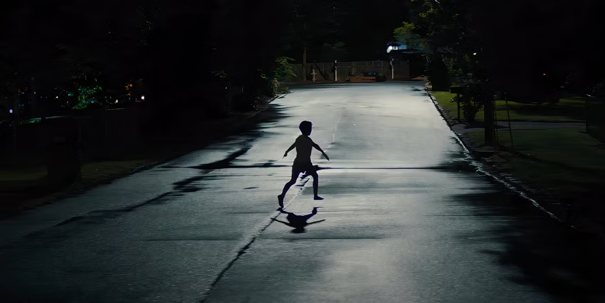
As the entire story is slowly revealed, so is the spell that Gladys casts and its mechanics. The first clue is shown when Justine sits in her car outside Alex’s house and falls asleep. Upon nightfall, Alex’s mother, under Gladys’s influence, enters Justine’s car and cuts off a lock of her hair. Later, during Marcus’s meeting with Gladys, she spots one of his ribbons and holds her gaze on it. It is seen again, cut and wrapped around one of the branches of Gladys’s magic tree. Gladys then cuts her hand, smearing her blood all over the ribbon and branch, and then takes a lock of Terry’s hair, wrapping it around the branch as well before snapping it, causing Marcus to attack Terry. When she drops the concoction into a bowl of water, the spell is lifted.
In this same scene, Gladys wraps the lock of Justine’s hair around the branch and snaps it, causing Marcus’s attack on her. Gladys later asks Alex for an object from each member of his class. The point of this is for her to cast a spell on a larger ratio of people in hopes of gaining more strength more quickly. Alex brings back all of the nametags of his classmates from their supply bins at the school. These details reveal the entire procedure of the spell and how it works. The branch harnesses the power, a possession of a character allows for them to becomes a host, the blood transfers the power to the spell caster, the lock of hair gives the host a victim to attack, the snap of the branch activates the spell, and water cleanses it all.
Dreamscapes and the Floating Gun
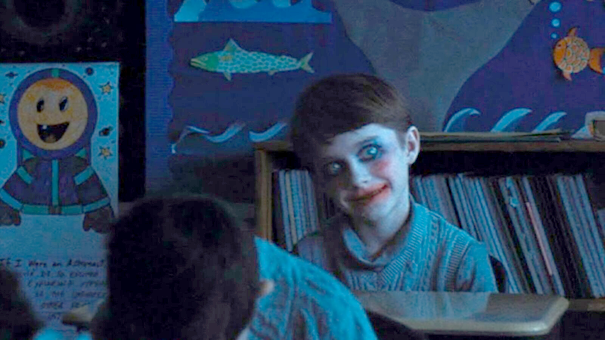
Dreams are crucial to the plot of the film, and they reveal a lot about the events that are to come. Justine and Archer each have a dream in the story where Gladys is present. This is likely representative of how these characters have nothing in common aside from their shared objective of finding the missing children and their ambition to achieve it. In Justine’s dream, she walks through her classroom where all of the children are present, but with their heads down on their desks. Alex is then shown in his seat with his head up but covered in Gladys’s makeup. This symbolizes how all of the children are under Gladys’s spell, and Alex, despite not being under a spell, is still being held under Gladys’s control. While Archer’s dream looks different, Gladys holds an important presence as well.
Archer’s dream begins with him looking at a picture of his son, Matthew, on his baseball team. He looks back at Matthew’s bed to find himself, asleep there. Glancing over at the digital alarm clock on Matthew’s bedside table, he sees that it is 2:17 A.M. In this moment the bedroom door opens and Archer begins calling out to Matthew running downstairs. The front door to the house opens and Archer finds Matthew running outside. He then follows him through the woods to a different house but it appears to be the exact same house as his own. Matthew runs inside, and before following him into the house, Archer spots a giant gun floating above the house. The number 217 appears on the gun just like hot it looks on the clock except there is no colon in between, an indication that it is not meant to be read as a time of night but rather, a different number of significance.
This image of the floating gun has been widely discussed since the film’s release, and although no theories have been confirmed, it has been largely thought to be an allegory for the school shooting epidemic in the United States. In 2022, a ban on assault rifles was voted on in the House of Representatives but did not ultimately pass. However, there were 217 winning votes on this ban, which many have suggested as a connection to the number 217 in Weapons. A further exploration of this theory acknowledges that the narrator tells the audience at the beginning of the film that the children never came back. It is known that these children were found but still not themselves. This notion that they left and never came back could be representative of the children that leave for school and never return. Another theory suggests biblical ties to the number 217, as there is a verse with the focal point of parents mourning the loss of their children titled, Matthew 2:17.
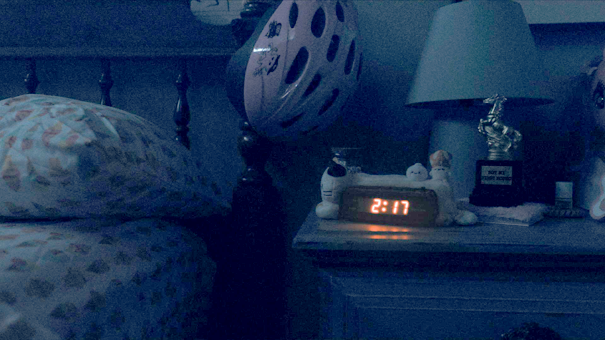
Within the context of the film, the most obvious symbolism of the floating gun is that the children and everyone else that has been placed under Gladys’s spell have all been weaponized. The floating gun is a clear nod to the film’s tile and central theme. 217 likely holds further contextual significance within the film’s universe as well. It is very possible that the time doubles as a ratio. Two people, Alex’s parents, were placed under the spell first and at the same time. Seventeen children were then simultaneously placed under the spell. Another possibility is that the number 2 references Gladys and Alex, as they are the only two people that know of the spell and are not put under it.
The rest of Archer’s dream sees him running into the house. Inside, the interior also seems similar to that of his own house but with a few added elements. Several very similar lamps are seen in on shot before Archer heads upstairs. There are several framed pictures throughout the house featuring birds and landscapes. The room where Archer finds Matthew heavily resembles his own bedroom at their house, where Archer has been sleeping. He finds Matthew laying in bed and speaks to him in an emotional monologue before his son is replaced by a brightly lit Gladys, startling him awake. This entire dream sequence draws a lot of intrigue. The way that the dreamscape was made seems hyper-realistic considering its detailed elements. Before Archer’s dream sequence, a poster can be spotted on Matthew’s bedroom wall featuring a large gun, reminiscent of the one floating above the house in his dream. Additionally, the house likely looks similar to his own because Archer has probably never entered the Lilly household or even recognized it from the outside. Matthew and Alex are not friends, in fact, Matthew is seen bullying Alex multiple times, so it stands to reason that Archer would have no known connection to the household. This may explain all of the lamps and generic pictures. Archer’s subconscious filled in gaps to create a home, placing common items such as lamps and nature scenes to create a realistic space. It is interesting how realistic this scene is, as the dreamscape that is created is very reminiscent of how dreams tend to feel in reality.
Allusions and Tributes
There are a few potential references to outside works that can be spotted throughout Weapons. In Archer’s dream, when he finds Matthew, he is in his bed with Batman sheets. Cregger wrote a Batman-adjacent screenplay that he has talked about openly, so this may have been a nod to that piece and may be a hint at its potential greenlight for production. Another reference can be found in a scene where Marcus and Terry have made seven hotdogs, a reference to a skit that was made by comedy troupe, “The Whitest Kids U’ Know” founded by Cregger. It may specifically be a tribute to Trevor Moore, a member of this group that passed away in a tragic accident. The seven hotdogs are featured in a skit where he plays a prominent role.
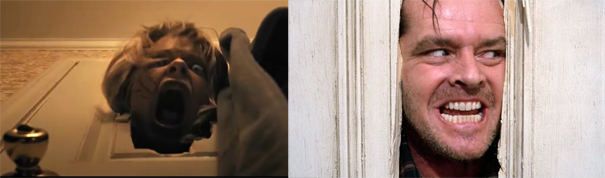
Tracing back to the infamous number 217, it can also be theorized as a reference to The Shining, where horrific events take place in room 217 at the hotel. This theory is supported by a scene where Alex is told by Gladys not to cross a line of salt where is parents stand behind it. He later crosses this line anyway, triggering his parents to attack him. He runs into his bedroom and shuts his door, but his mother busts a hole in the door and her face comes through it while she screams. This shot is reminiscent of the famous scene where Jack Torrence does the same action in the film, The Shining. While there is no confirmation of any of these theories, it has been made clear that Cregger is open to all interpretations of the film and has openly talked about drawing inspiration from past works.